Self-optimization

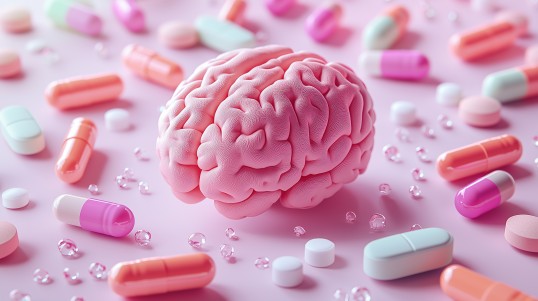
Colorful pills surround a pink brain model on a pastel surface

Source: silvia - stock.adobe.com

Self-optimisation (also termed personal development or self-improvement) is an ongoing process by which a person improves their physical, psychological, cognitive or social skills and characteristics. This includes their performance (particularly at work), health, fitness, self-discipline, and an attractive/youthful appearance; it also extends to abilities such as self-reflection and empathy. Self-improvement is considered a key facet of today’s individualized society. This is also recognized by experts, as the aspirations towards it – promoted in particular by social media – have gained unprecedented significance and public attention. The booming wellness economy also reflects the phenomenon [1].

Enhancement is a particular form of self-improvement, and refers to methods involving technology [2]. Neuroenhancement, or "brain doping", refers to attempts by healthy individuals to increase their cognitive performance. A broader definition encompasses all means to this end, including pharmacological, neurotechnological and surgical measures. Neuroenhancement in this sense also includes applications of modern neurology, such as neural implants, brain-computer interfaces and transcranial magnetic stimulation [3]. However, the term is most commonly used to refer to the intake of psychoactive substances. The aim is to improve attention, concentration and memory and to cope better with stressful situations at work [4]. These substances are usually taken only as needed under a heavy workload, and not only to improve performance, but also out of fear of otherwise being unable to cope with the tasks at hand [5].

Three groups of psychoactive substances are most commonly used as neuroenhancers: 1) non-prescription substances, such as coffee, caffeine tablets and caffeinated energy drinks, and ginkgo biloba; 2) prescription medications, such as methylphenidate (Ritalin) or antidepressants, and 3) illegal substances such as cocaine, ecstasy or methamphetamine [4]. It should be noted that prescription substances have other indications and are not intended or approved for use as neuroenhancers.

Psychedelic microdosing refers to the regular intake of psychedelics, such as lysergic acid diethylamide (LSD) or hallucinogenic mushrooms in extremely low doses. Users seek to increase their creativity and mental performance, reduce stress and suppress negative feelings, but without the hallucinations typical of LSD [6].

According to a survey conducted in 2023, 70% of Germans use performance-enhancing substances. 64.2% stated that they had consumed caffeinated beverages such as coffee or energy drinks in the last twelve months. This was followed by dietary supplements and household remedies (31.4%). 3.7% stated that they take prescription medications without actually having a medical need for them. Around 40% of those surveyed stated that they could imagine taking performance-enhancing medications. Cannabis had been used by 4.1% of those surveyed to improve performance by reducing stress, or to stimulate creativity. The use of other illegal substances in the preceding twelve-month period, such as cocaine or amphetamines, was relatively rare, at just 1.4% [7].

Men are more likely than women to use caffeine pills and illegal drugs such as cocaine. Illegal drugs were also more prevalent in urban areas than in rural areas, and among younger people up to the age of 34. Prescription medications are taken mainly by people aged under 34 and over 44. In the case of the older age group, it can be assumed that they wish to compensate for declining cognitive performance [8]. Performance pressure could be a factor among young adults. Among students, 23% admit to using medication to improve their learning performance during stressful examination periods [9].

With regard to effects, side effects and long-term effects, the available studies on the use of neuroenhancers by healthy individuals are generally inconclusive [4]; studies show, however, that stimulants usually fall short of subjective expectations [9]. Conversely, data from animal experiments published in 2024 indicates that it may be possible to improve cognitive functions by the use of cannabinoid medications [10].

Biohacking is becoming an increasingly popular form of self-improvement. Adherents of biohacking use devices, including wearables and even chip implants [11], to monitor their body and sleep data continually. By doing so, they aim to develop an optimum understanding of their own bodies and improve particular aspects of them, enhance their physical and mental energy, and achieve a sustained improvement in their performance, health and attitude towards life. Another goal is to counteract the ageing process [12].

Self-enhancement is a controversial topic. Both internal motivation and external pressure can be assumed in most cases to be factors. In extreme cases, workers may conceivably even be pressured to optimize their performance, either directly by their employers or indirectly through the deliberate stimulation of competition [2].


  • What is accelerating the trend, and what is slowing it down?

    The growing service and information sector is bringing about changes in the modern world of work that are both rapid and profound. Lifelong acquisition of knowledge and its appropriate application are key factors for success, and demands on cognitive performance are increasing. For example, automation, robotisation and artificial intelligence require computers, systems and machines to be operated correctly, increasingly complex tasks to be solved in many occupational groups, and continuous learning and re-learning. At the same time, new technologies are accelerating the way people work and giving rise to expectations that they be almost continually available [13]. The increasing blurring of work and leisure may also be a factor [3]. Finally, the growing significance of social media, with its often embellished, unrealistic content, permits constant comparison with other people, thereby creating ideals that are almost unachievable.

    A British study conducted in 2022 showed that society is changing, and with it the expectations people have of their own abilities. According to the meta-analysis, perfectionism has steadily increased among young people. The expectations parents make of their own children have also grown steadily. However, experts also suspect that insecurity, expectations that are less realistic than those of previous generations, competition and growing social pressure in a globalized world are factors driving the trend [14].

    Numerous stress factors associated with the modern world of work can encourage the use of neuroenhancers. These include, for example, high deadline and performance pressures, high emotional strain, constant availability, tight deadlines and little scope for autonomous action, excessive working hours and long periods of shift work, through to examination anxiety and job security worries. Strong competition within companies and the associated competitive thinking – particularly among managers – may also encourage neuroenhancement [9; 15].

    Viewed against the questionable resilience of the German pensions system in the face of demographic change and possible further shifts in the statutory retirement age or the need for increasing numbers of people to work to supplement their pensions, it is worth considering whether in the future, older people will increasingly be forced to resort to medication to maintain their performance.

    Given the competitive nature of society and the high pressures to perform in the world of work, it seems unlikely that the trend towards self-improvement and, in particular, the consumption of performance-enhancing psychoactive substances will decline. In addition, experts have identified a link between anxiety and concerns prompted by fundamental changes in the world order and severe threats posed by climate change, wars and terrorism and a growing retreat into “private happiness” [16]. In this context, the use of neuroenhancers could promote excessive self-absorption, and be perceived as helping users to increase their physical performance and mental balance, thereby giving them more control at least over their private lives and personal well-being.

    One significant reason why working people do not use neuroenhancers more often is the fear of side effects. Were it to become possible in the future to develop performance-enhancing medications with fewer side effects and greater efficacy in healthy people, the acceptance and thus consumption of neuroenhancers could increase significantly [18].

  • Who is affected?

    The following factors may encourage the use of prescription medications, i.e. neuroenhancement: high demands for sustained cognitive, physical or mental performance, time pressure, regular shift work [17], job insecurity and unskilled work [18]. Those at risk include committed workers who find it difficult to distance themselves from work, people with mental health problems, and schoolchildren and students who are under pressure to perform [5].

  • Examples (in German only)
  • What do these developments mean for workers’ safety and health?

    An increase in at least some aspects of cognitive performance in healthy individuals been proven only for caffeine, methylphenidate, amphetamines and modafinil [4; 8]. The effect can vary greatly from one person to the next. The lower the performance level at the beginning of use, the greater the benefit for the individual; in individuals who are already performing at a high level, the intake of neuroenhancers may even be counterproductive, and reduce cognitive performance [4]. The effects appear to be difficult to predict: in an experiment involving 40 test subjects, conducted in 2023, methylphenidate, dextroamphetamine and modafinil impaired cognitive performance in mentally healthy subjects, even though they made more effort, as evidenced by an increased number of attempts to solve problems [19].

    Stimulants such as methylphenidate pose health risks, possibly even after a single dose: headaches, dizziness, tremors, excessive nervousness, perspiration, sleep disorders, cardiac arrhythmia, organ damage, convulsions and epileptic seizures [9]. Even mental illnesses such as mania, with symptoms such as abnormal euphoria and overconfidence or psychoses, are possible with Ritalin or amphetamines [8]. This can lead to impairments in performance and to concentration deficits. Above all, users can endanger themselves and others in the workplace and increase the risk of accidents [5].

    In addition, neuroenhancers may induce dependency to varying degrees. Changes and adjustments in brain metabolism generally have the effect of rapidly promoting regular use and an increase in dosage. Neuroenhancers can also have a considerable impact on emotions and moods, and result in personality changes. In extreme cases, this may result in burnout and symptoms of depression [20]. Over long-term use, a risk exists of those affected neglecting social contacts and personal relationships in their private and working lives, potentially with a negative impact on the working atmosphere [4; 9]. It can also be assumed that excessive self-absorption impairs the sense of solidarity and capacity for teamwork and reduces willingness to support colleagues.

    Stressful working conditions such as high time pressure and demanding tasks, especially shift work, can increase the likelihood of people turning to neuroenhancers. This is shown by a study focusing on professions with particularly high workloads: salaried doctors, programmers, advertising professionals and journalists. For men, links exist to psychosocial working conditions, such as emotional demands and job insecurity. Psychosocial resources such as role clarity and support from colleagues, on the other hand, reduce neuroenhancement in men. Burnout and depression are not only potential consequences of neuroenhancement, but also risk factors for its causation [20].

    Personality is also a factor: people who are overly committed, have a tendency towards perfectionism and have difficulty distancing themselves from work are more likely to consider taking neuroenhancers when their workload is high [17]. Finally, family pressures and a low skill level can also have a negative influence [15]. These factors, all stressful in themselves, in combination with neuroenhancers pose an additional risk of stress, overload and harm to health.

    Supposedly, everyone is able to improve their own performance by means of biohacking and neuroenhancement. This can exert considerable pressure on employees to use such substances or methods. People who prefer not to use neuroenhancers may be forced into a dilemma of either accepting disadvantages in their careers or training, or resorting to using them against their will [21]. This can lead to a spiral of performance enhancement that is harmful irrespective of the physical risks and side effects, as it can lead to overload and reduce job and life satisfaction, in the long term. There is a risk of employers failing to make structural improvements to working conditions, take the needs of workers into account or create more efficient processes, and instead passing responsibility on to the individual, who is supposedly capable of performing adequately [18; 22].

    Nevertheless, arguments in favour of selective neuroenhancement could be discussed, irrespective of its often overestimated effects and its potential side effects. This could include professions with extreme stress levels, such as pilots, surgeons and military personnel. For individuals in such groups, the selective use of neuroenhancers could improve performance in the short term or at least convey a sense of security, alleviate anxiety and boost confidence in their own abilities. Similarly, beta blockers can be used to combat stage fright in musicians, for example, and break the vicious circle of performance pressure, negative expectations and failed auditions. Short-term use could be particularly helpful for young people who are under considerable psychological strain and whose future careers are at stake [23].

    However, the desire for self-improvement can become a problem even among children and adolescents – owing to the early onset of competition, high pressure to perform and examination anxiety. The harmful effects on health are significantly more severe for young people and adolescents [24]; moreover, even at an early age this can already lay the foundation for long-term abuse, including in the workplace. A cause for concern is that young people have a significant lack of information on cognitive performance enhancers, with regard both to their effects and their side-effects on health [25].

    However, alternative forms of self-improvement, such as exercising, yoga, a healthy diet and stress reduction through meditation, can serve as sustainable and healthy means of improving well-being, performance and fitness for work. Advice and information from experts can be helpful, as can the moderate use of apps, for example to promote mental health or work-life balance.

  • What observations have been made for occupational safety and health, and what is the outlook?
    • The effectiveness of known neuroenhancement medications – most of which are illegal or require a prescription – has so far been limited or only of short duration, the benefits mostly being overestimated and side-effects underestimated; significantly more effective substances are not expected to become available in the foreseeable future.
    • The use of neuroenhancers is already widespread, and situations in life characterized by crises and growing complexity are likely to fuel the trend towards self-improvement further. As young insured persons in education and training are just as affected by this trend as employees, the German Social Accident Insurance should pay particular attention to it. The trend should be monitored closely.
    • Retention of performance is at the forefront of neuroenhancement: against this backdrop, work intensification and performance pressure are key concepts in prevention strategies.
    • Cognitive and emotional overload can be prevented through appropriate work design and acquisition of skills. Workplace health promotion measures – including in cooperation with health insurance institutions – can have a supportive effect.
    • The provision of information and raising awareness about neuroenhancement is already appropriate in schools.
  • Sources

    [1] The Global Wellness Economy Reaches a New Peak of $6.3 Trillion - And Is Forecast to Hit $9 Trillion by 2028. Hrsg.: Global Wellness Institute, Florida 2024
    https://globalwellnessinstitute.org/press-room/press-releases/the-global-wellness-economy-reaches-a-new-peak-of-6-3-trillion-and-is-forecast-to-hit-9-trillion-by-2028/ (abgerufen am 8.1.2025)

    [2] Selbstoptimierung. Hrsg.: Bundeszentrale für politische Bildung, Bonn 2020
    https://www.bpb.de/themen/umwelt/bioethik/311818/selbstoptimierung/ (abgerufen am 6.1.2025)

    [3] Neuro-Enhancement. Hrsg.: Wikimedia Foundation Inc., San Francisco 2024
    https://de.wikipedia.org/wiki/Neuro-Enhancement (abgerufen am 8.1.2024)

    [4] Neuroenhancement: Doping für das Gehirn. Hrsg.: Bayerisches Landesamt für Gesundheit und Lebensmittelsicherheit (LGL), Erlangen 2024
    https://www.lgl.bayern.de/gesundheit/arzneimittel/warnungen_verbraucherinformationen/verbraucherinformationen/neuroenhancement.htm (abgerufen am 12.12.2024)

    [5] Neuroenhancement: Hirndoping im Job. Hrsg.: Deutsche Gesetzliche Unfallversicherung e.V. (DGUV), Berlin 2018
    https://www.dguv.de/medien/ifa/de/vera/2018_forum_forschung_extra/ws_grenzenlos_neuroenhancement-cosmar.pdf (nicht barrierefrei) (abgerufen am 3.1.2025)

    [6] LSD-Microdosing: Harmloses Hirndoping oder gefährlicher Trend? Hrsg.: Pronova BKK, Ludwigshafen 2024
    https://magazin.pronovabkk.de/ausgabe-1-2024/cannabiskonsum/lsd-microdosing/ (abgerufen am 3.1.2025)

    [7] Prevalence of Legal, Prescription, and Illegal Drugs Aiming at Cognitive Enhancement across Sociodemographic Groups in Germany. Hrsg.: Taylor & Francis Group, London 2023
    https://www.tandfonline.com/doi/full/10.1080/01639625.2024.2334274#abstract (abgerufen am 12.12.2024)

    [8] Deutschlands größte repräsentative Studie über "Hirndoping" veröffentlicht. Hrsg.: Universität Erfurt, Erfurt 2024
    https://www.uni-erfurt.de/universitaet/aktuelles/news/news-detail/deutschlands-groesste-repraesentative-studie-ueber-hirndoping (abgerufen am 16.12.2024)

    [9] Neuroenhancement: Doping fürs Gehirn? Hrsg.: Barmer, Berlin 2024
    https://www.barmer.de/gesundheit-verstehen/medizin/medikamente/neuroenhancement-1140638#Wie_wirken_Methylphenidat_und_Modafinil_im_Gehirn-1140638 (abgerufen am 12.12.2024)

    [10] Verbessert THC die Hirnleistung? Hrsg.: Deutscher Apotheker Verlag Dr. Roland Schmiedel GmbH & Co. KG, Stuttgart 2024
    https://www.deutsche-apotheker-zeitung.de/news/artikel/2024/11/19/verbessert-thc-die-hirnleistung (abgerufen am 16.12.2024)

    [11] Immer mehr Biohacker unterwegs. Hrsg.: Avoxa - Mediengruppe Deutscher Apotheker GmbH, Eschborn 2023
    https://www.pharmazeutische-zeitung.de/immer-mehr-biohacker-unterwegs-142454/seite/2/?cHash=93c741038692339320b4af378234a5ed (abgerufen am 27.2.2025)

    [12] Biohacking. Hrsg.: AOK Sachsen-Anhalt, Magdeburg 2024
    https://www.deine-gesundheitswelt.de/sport-bewegung/biohacking (abgerufen am 15.1.2024)

    [13] Me, Myself & I - Die Suche nach dem Flow, Selbstoptimierung statt Arbeitsschutz? Hrsg.: Heise Medien GmbH & Co. KG, Hannover 2024
    https://www.telepolis.de/features/Me-Myself-I-Die-Suche-nach-dem-Flow-Selbstoptimierung-statt-Arbeitsschutz-9746132.html (abgerufen am 20.1.2025)

    [14] Young people's perceptions of their parents' expectations and criticism are increasing over time: Implications for perfectionism. Hrsg.: American Psychological Association Washington 2022
    https://psycnet.apa.org/doiLanding?doi=10.1037%2Fbul0000347 (abgerufen am 15.1.2024)

    [15] Neuroenhancement - Hirndoping am Arbeitsplatz. Hrsg.: Deutsche Gesetzliche Unfallversicherung e. V., Berlin 2015
    https://publikationen.dguv.de/forschung/iag/aus-der-arbeit-des-iag/3072/neuroenhancement-hirndoping-am-arbeitsplatz-aus-der-arbeit-des-iag-nr.-3078?number=SW17072 (abgerufen am 10.1.2025)

    [16] Deutschland auf der Flucht vor der Wirklichkeit. Hrsg.: rheingold GmbH und Co. KG, Köln 2023
    https://www.rheingold-marktforschung.de/gesellschaft/deutschland-auf-der-flucht-vor-der-wirklichkeit/ (abgerufen am 5.3.2025)

    [17] Psychische Belastungen bei der Arbeit und Neuroenhancement Hrsg.: Bundesanstalt für Arbeitsschutz und Arbeitsmedizin (BAuA), Dortmund 2016
    https://www.baua.de/DE/Angebote/Publikationen/Bericht-kompakt/F2283-2 (abgerufen am 17.1.2025)

    [18] DAK-Gesundheitsreport 2015 Hrsg.: DAK-Gesundheit, Hamburg 2015
    https://caas.content.dak.de/caas/v1/media/48538/data/deb91ba0391001f693fc315d021fa72d/150317-download-bericht-gesundheitsreport-2015.pdf (PDF, 2043 KB, nicht barrierefrei) (abgerufen am 17.1.2025)

    [19] Not so smart? "Smart" drugs increase the level but decrease the quality of cognitive effort. Hrsg.: American Association for the Advancement of Science, Washington 2023
    https://www.science.org/doi/10.1126/sciadv.add4165 (abgerufen am 3.1.2025)

    [20] Neuroenhancement in Deutschland am Beispiel von vier Berufsgruppen. Hrsg.: Georg Thieme Verlag KG, Stuttgart 2020
    https://www.thieme-connect.com/products/ejournals/abstract/10.1055/a-1026-6157 (abgerufen am 20.1.2025)

    [21] Neuroenhancement: Falsche Voraussetzungen in der aktuellen Debatte. Hrsg.: Deutscher Ärzteverlag GmbH, Berlin 2010
    https://www.aerzteblatt.de/archiv/79523/Neuroenhancement-Falsche-Voraussetzungen-in-der-aktuellen-Debatte (abgerufen am 21.1.2025)

    [22] Nicht jeder Stress lässt sich einfach wegatmen. Hrsg.: Verlagsgesellschaft Madsack GmbH & Co. KG, Hannover 2024
    https://www.rnd.de/wissen/gesundheit-im-fokus-warum-selbstoptimierung-oft-scheitert-IPTE5I2NKZHFDKMFF5VMUJ77KA.html (abgerufen am 8.1.2025)

    [23] Doping für Gehirn und Psyche. Hrsg.: Dr. Curt Haefner-Verlag GmbH, Heidelberg 2018
    https://www.sifa-sibe.de/arbeitssicherheit/doping-fuer-gehirn-und-psyche/ (abgerufen am 13.12.2024)

    [24] Hirndoping kann bleibende Folgen haben. Hrsg.: MMCD NEW MEDIA GmbH, Düsseldorf 2014
    https://www.scinexx.de/news/medizin/hirndoping-kann-bleibende-folgen-haben/ (abgerufen am 27.2.2025)

    [25] "Hirndoping" - lernen leicht gemacht mit Pillen? Hrsg.: Bundesministerium für Bildung und Forschung (BMBF), Bonn 2017
    https://www.gesundheitsforschung-bmbf.de/de/hirndoping-lernen-leicht-gemacht-mit-pillen-6120.php (abgerufen am 27.2.2025)

Contact

Dipl.-Psych. Angelika Hauke

Work Systems of the Future

Tel: +49 30 13001-3633


Dipl.-Übers. Ina Neitzner

Work Systems of the Future

Tel: +49 30 13001-3630
Fax: +49 30 13001-38001